More Than a Uniform: Clarksburg 11U Youth Football Takes the Field for Prostate Cancer Awareness
By: Ryan Thyparambil & Megan Clancey
Category: PSE
Read Time: 4 Minutes
By: Ryan Thyparambil & Megan Clancey
Category: PSE
Read Time: 4 Minutes
Last updated: 27 Aug 2026
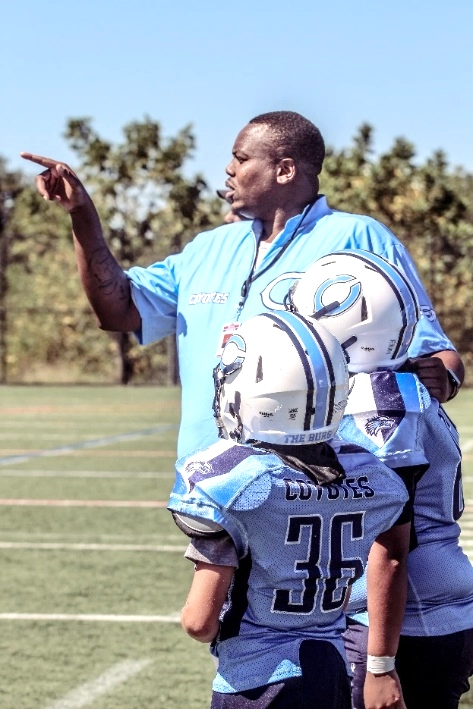
This fall, Clarksburg youth football will take the field in prostate cancer awareness blue.
The custom jerseys and pants, supported by Oxford BioDynamics' US entity, are designed to do more than stand out under the lights. They are designed to start conversations about men's health, early detection, family history, and the importance of knowing your prostate cancer risk.
Although the players may be too young to think about prostate cancer screening, the men cheering for them are not.
Every football weekend brings together players, parents, coaches, siblings, grandparents, and neighbors. For Oxford BioDynamics, that makes the sideline a meaningful place to raise awareness about prostate cancer, especially in communities where early detection and education can make a real difference.
The message is straightforward: know your cancer risk, talk to your doctor, and do not wait. Early detection can save lives.
The Uniform as a Conversation Starter
Prostate cancer awareness is often framed as a clinical conversation, something that happens in an exam room after a PSA test, a blood draw, or a doctor visit. But for many men, the first step is not testing. It is talking.
Talking with family. Talking with friends. Talking with a doctor. Talking about family history. Talking about risk.
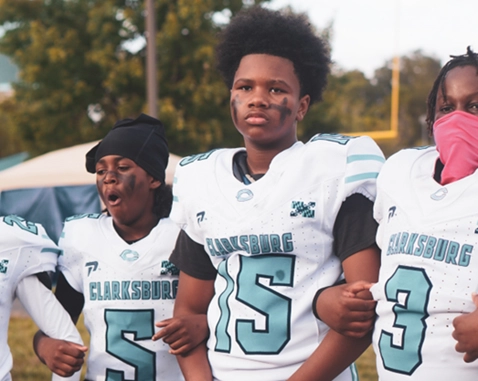
Community spaces like youth football can help normalize those conversations. A blue uniform may seem simple, but it becomes a visible reminder that men's health matters and that screening conversations should not wait until symptoms appear.
For Clarksburg Head Coach Trae Addison, the awareness uniform fits naturally into what youth football is supposed to be about.
"Football has always been bigger than the game for us," Addison said. "It is about family, discipline, community, and teaching our boys to take care of each other. If wearing these uniforms helps start a conversation about men's health in our families, then that is something we are proud to stand behind."
Addison said the message is also important for the players themselves. Even if they are too young to understand every detail of prostate cancer awareness, they are old enough to understand that football can represent something bigger than the game itself.
"At Clarksburg, we want our players to understand that they are part of something bigger than themselves," Addison said. "This season, these uniforms give us a chance to represent our community and bring attention to an issue that affects too many families. We are proud to wear blue and proud to help carry that message."
Why This Matters for African American Men
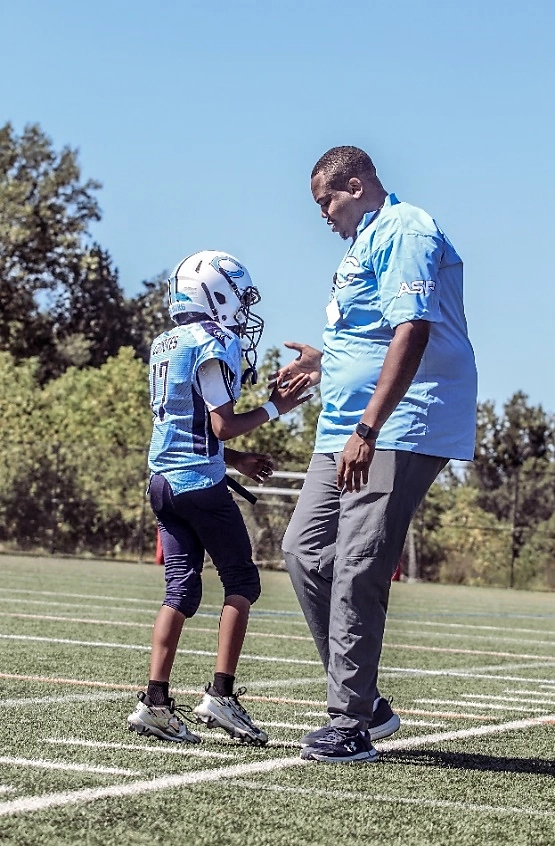
For Clarksburg, this message is especially meaningful because the football community includes many African American families, a group disproportionately affected by prostate cancer.
Black men are about 70% more likely to be diagnosed with prostate cancer than White men and are more than twice as likely to die from the disease. They are also more likely to develop aggressive forms of prostate cancer.
The goal is to remind men and families that early talks, knowledge of family history, screening, and timely follow-up can save lives. For many families, prostate cancer is not an abstract statistic. It is a father, grandfather, uncle, coach, friend, or neighbor.
In communities where prostate cancer has touched families across generations, awareness has to happen in more than one place. It belongs in clinics and exam rooms, but it also belongs in the everyday spaces where families gather, where men talk, and where trusted voices can help make the conversation feel less intimidating.
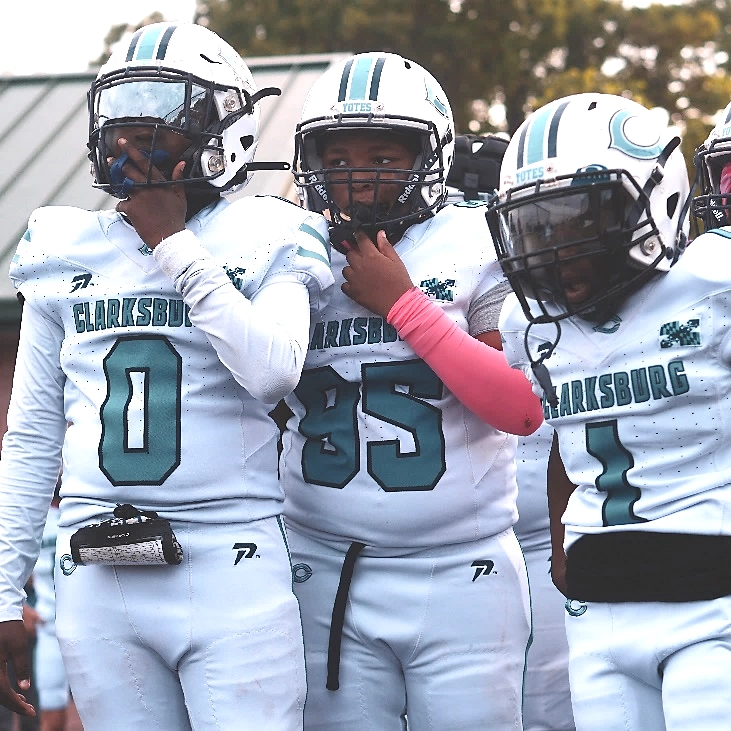
That is part of why football can be such a powerful platform for cancer awareness. The NFL and American Cancer Society have shown through the Crucial Catch initiative that football can help bring screening, early detection, and risk-reduction messages to fans and communities beyond the clinic. At the youth level, Clarksburg is carrying that same idea into a local setting, using the visibility of the game to remind families that awareness starts with attention, conversation, and action.
Coaches as Trusted Messengers
Youth football coaches are often more than just coaches. They are mentors, teachers, motivators, and trusted voices in the community. They teach discipline, effort, teamwork, accountability, and how to look out for the person next to you.
Coach Shakyri "Shak" Smith said coaches have a responsibility to use their platform in ways that matter beyond football.
"A lot of young men learn by watching the adults around them," Smith said. "If we want our players to take care of each other, then the men in their lives have to model that too. Sometimes that means having tough conversations we would rather avoid. Football brings people together, and we should use that platform to look after each other."
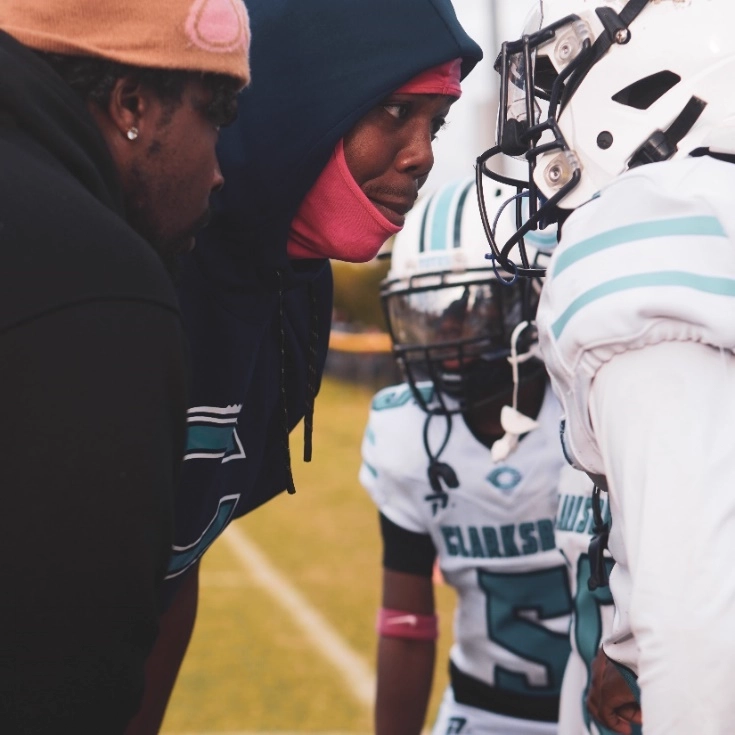
Coach DJ Addison said the uniforms are a reminder that the lessons taught through football do not stop when practice ends. "As coaches, we are always teaching the boys about responsibility and taking care of the people around them," DJ Addison said. "This is part of that same message. We want our players to see that being strong also means being willing to talk about health, family, and the things that affect our community."
For Clarksburg Football Commissioner Dennis Castaneda, the effort reflects what youth sports organizations can represent when they use their platform beyond the game.
"Youth football is about more than wins, losses, and what happens on the field," Castaneda said. "It is about building young people, supporting families, and representing the community the right way. We are proud that Clarksburg football can help carry a message that is bigger than the game and show what it means to support our families beyond the field."
A Parent's Perspective
For parents, the uniforms carry another layer of meaning. Toya Jones, a Clarksburg parent whose son Coledyn plays for the team, said the message resonates deeply.
"You come to watch your child play football, but something like this makes you think about the people you love," Jones said. "It can start a conversation with a father, a grandfather, an uncle, or a friend. That matters."
Jones, who has battled cancer herself, said awareness is personal. "When you have seen cancer up close, you know that awareness is not just a slogan," Jones said. "It is about people getting information, asking questions, and taking their health seriously."
Oxford BioDynamics and Community-Level Awareness
Oxford BioDynamics is focused on improving the prostate cancer diagnostic pathway through blood-based testing and better risk assessment. But education and awareness are also part of the mission. Supporting Clarksburg's prostate cancer awareness uniforms is one way to bring that message beyond the clinic and into the places where families already gather.
"At Oxford BioDynamics, we spend a lot of time talking about prostate cancer detection in clinical settings," said Dr. Joe Abdo, VP Clinical Diagnostics at Oxford BioDynamics, whose son, Winston, plays on the Clarksburg defensive line. "Awareness does not only happen in clinics. It happens in family rooms, on sidelines, and in community spaces where men see a message and maybe decide it is time to ask a question, schedule an appointment, or talk to their doctor."
A Message for the Sideline
This fall, when Clarksburg takes the field in blue, the uniform will carry a simple message: know your prostate cancer risk, talk to your doctor, and do not wait.
For the players, it is a special uniform. For the community, it is a reminder. For the fathers, uncles, grandfathers, coaches, and neighbors on the sideline, it may be the start of a conversation that matters.
More than a uniform. A conversation starter.
About the Authors
Ryan Thyparambil is a rising senior at Urbana High School, a full-time dual enrollment student at Frederick Community College, and a Molecular Oncology Intern at Oxford BioDynamics. He serves as president of Urbana's FBLA chapter, which has grown to more than 300 members and is now the largest in Maryland. An Eagle Scout, Ryan has demonstrated a longstanding commitment to leadership, service, and community engagement. He is especially interested in the potential of artificial intelligence to improve healthcare and hopes to help shape the future of medicine through technology.
Megan Clancey is a rising junior at Georgetown Visitation Preparatory School with interests in science, medicine, and community service. Prostate cancer awareness is especially meaningful to her, as two members of her family have battled the disease. She hopes to continue exploring opportunities in healthcare and clinical research.
Subscribe to receive our latest blog posts
Topics from groundbreaking discoveries to cutting-edge advancements and industry
trends.
The EpiSwitch PSE test is a powerful diagnostic tool that determines a person's current likelihood of having prostate cancer. Used alongside or after a standard PSA test, PSE significantly improves detection accuracy and helps reduce unnecessary MRIs, biopsies, and treatments.
This powerful test is valuable for identifying individuals requiring biopsy and those suitable for active surveillance without further testing.
Learn About PSE